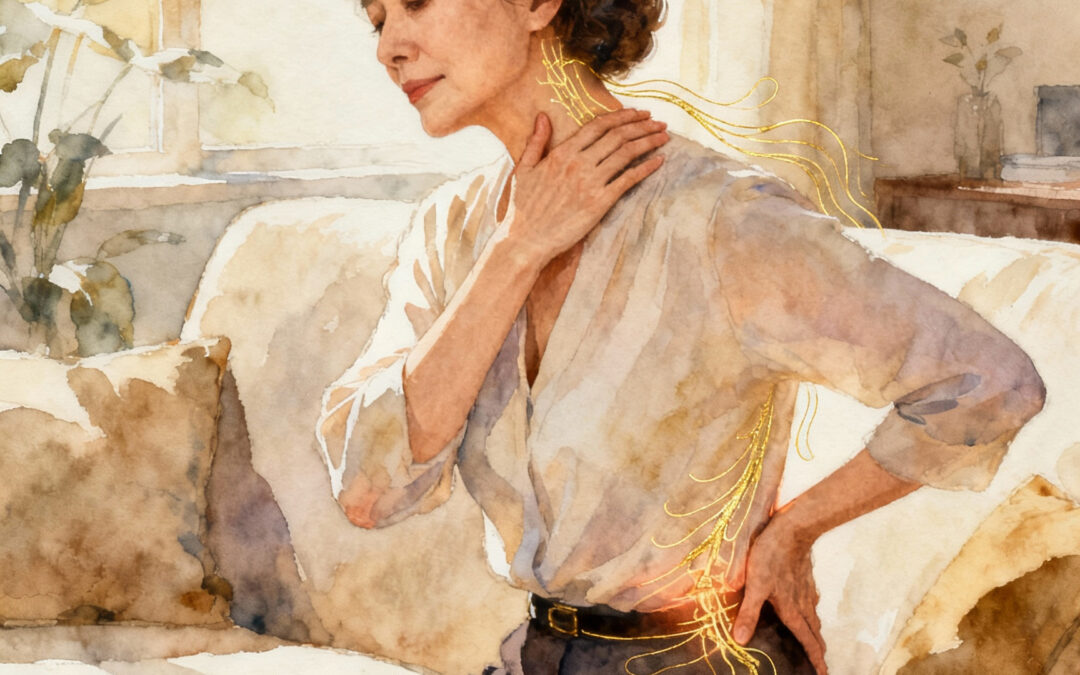
Sedentary Lifestyle · Stress · Mechanical Imbalance · Silent Inflammation Today, human beings live more comfortably than ever before— yet our bodies have never been more tense, fatigued, or inflamed. This contradiction is not accidental. It is the result of a new pressure field surrounding the modern body: a combination of lifestyle, emotional load, mechanical habits, and environmental stressors. From a Fasciapuncture® perspective, pain is rarely a sign of failure. It is a sign of overload—the body expressing its struggle to maintain balance. Below are the four major forces reshaping the fascia and increasing chronic pain in our time.
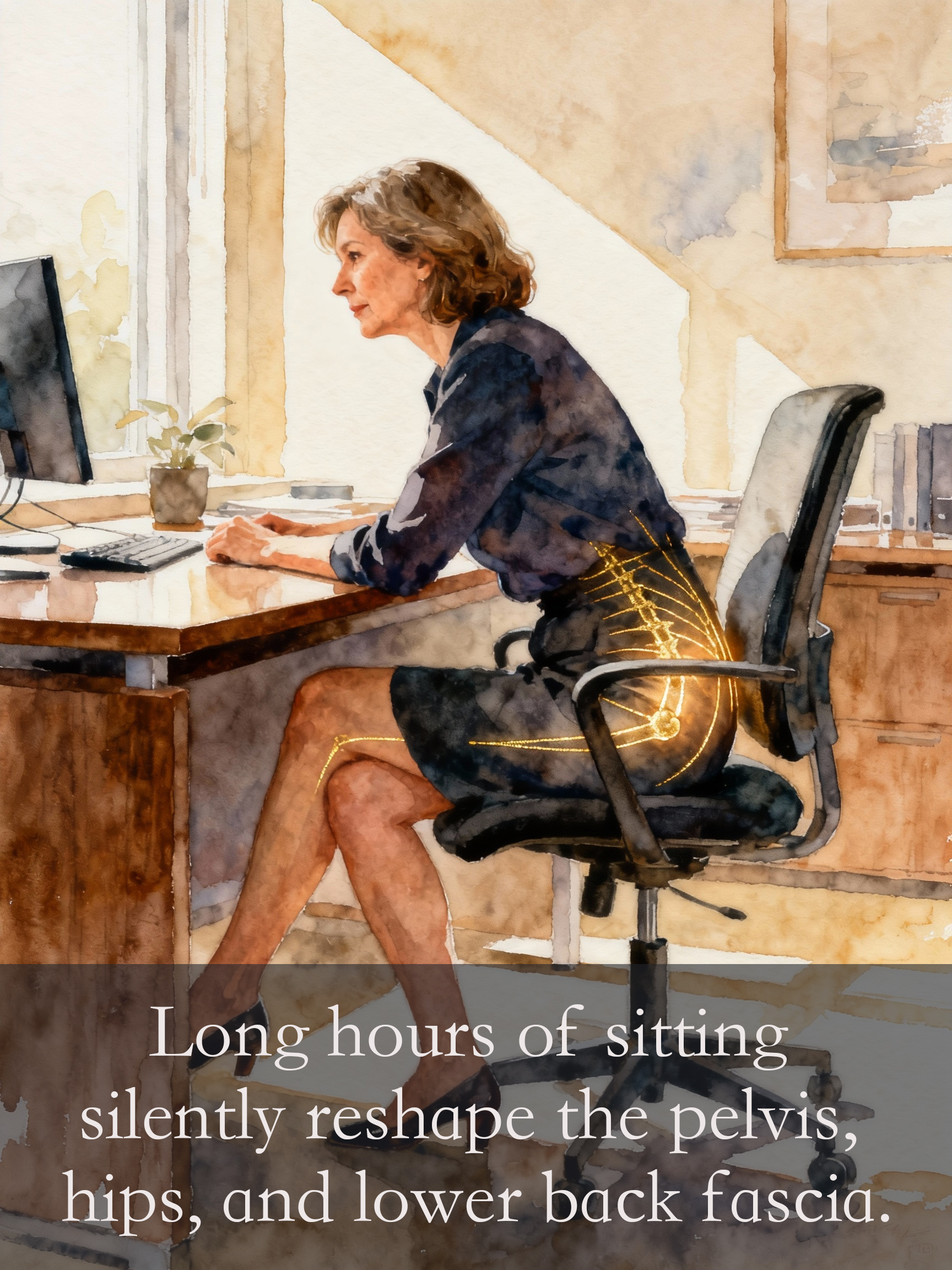
1. Sedentary Living: The Body Designed for Movement Now Sits Still
The human body is built to walk, reach, bend, rotate, breathe deeply, and explore space.
But today we:
• sit at work
• sit while commuting
• sit during meals
• sit to relax
• sit to scroll through screens
Hours accumulate. Ligaments shorten. Fascia loses its gliding capacity. Circulation slows. Posture collapses inward.
Sedentary habits lead to:
• tight hip flexors
• sacroiliac imbalance
• thickened cervical fascia
• overworked shoulder muscles
• sleeping gluteal muscles
• increased lumbar pressure
• nerve traction along multiple chains
Every “mysterious pain” has a mechanical story behind it.
2. Stress: A Nervous System That Never Switches Off
Modern stress is continuous and subtle — constant notifications, emotional suppression, poor sleep, performance pressure, the inability to slow down.
This traps the body in chronic sympathetic overactivation — a permanent “fight or flight” mode.
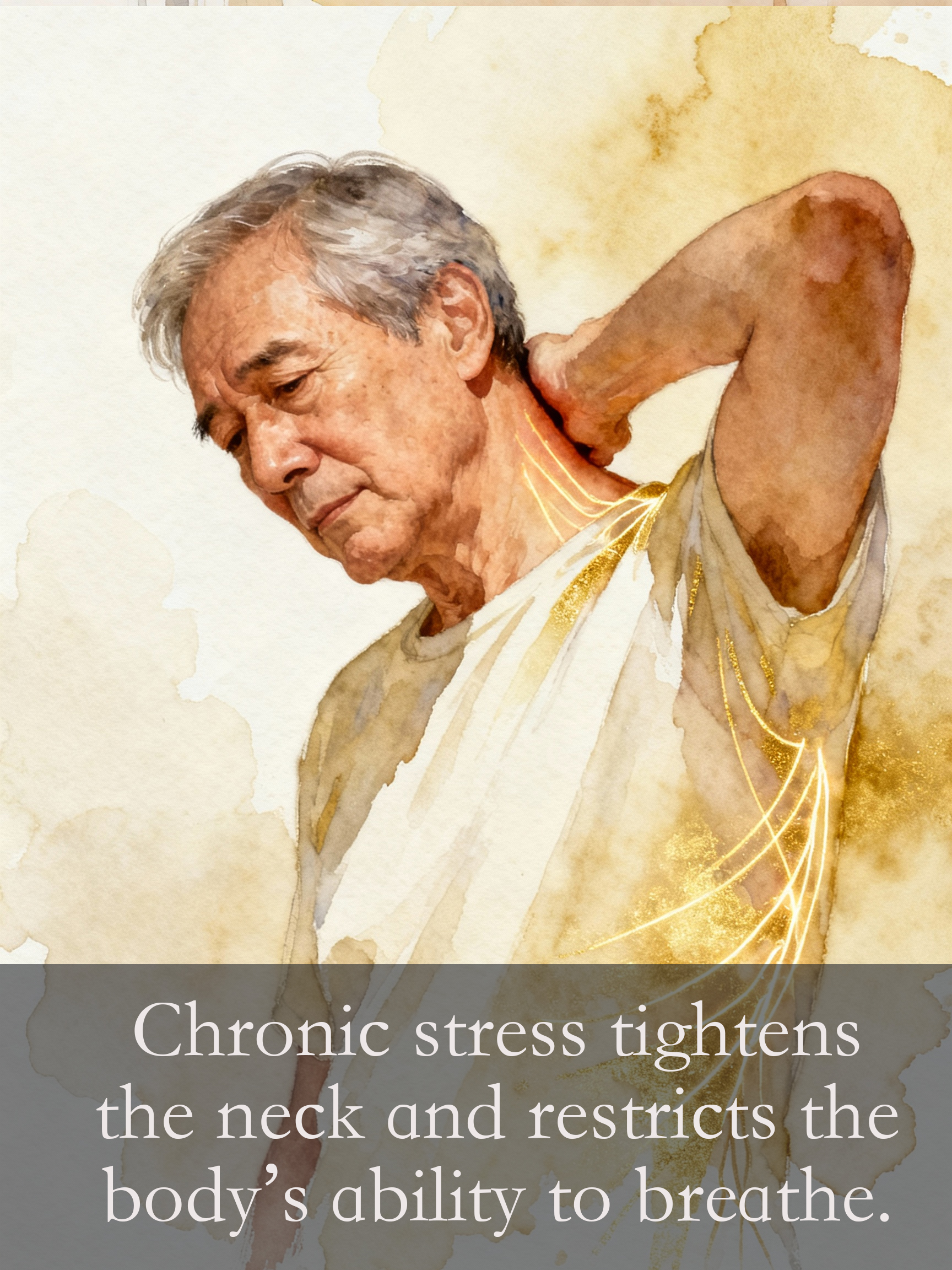
Physiological consequences include:
• shallow breathing
• tension in the neck and diaphragm
• reduced digestive function
• impaired tissue repair
• increased muscle tone
• fascial stiffness
• heightened nerve sensitivity
The fascia becomes the mirror of the nervous system.
Clinically, this appears as:
• headaches
• dizziness
• chest tightness
• digestive discomfort
• anxiety-driven muscular tension
• persistent insomnia
3. Mechanical Imbalance: Daily Habits That Reshape the Body
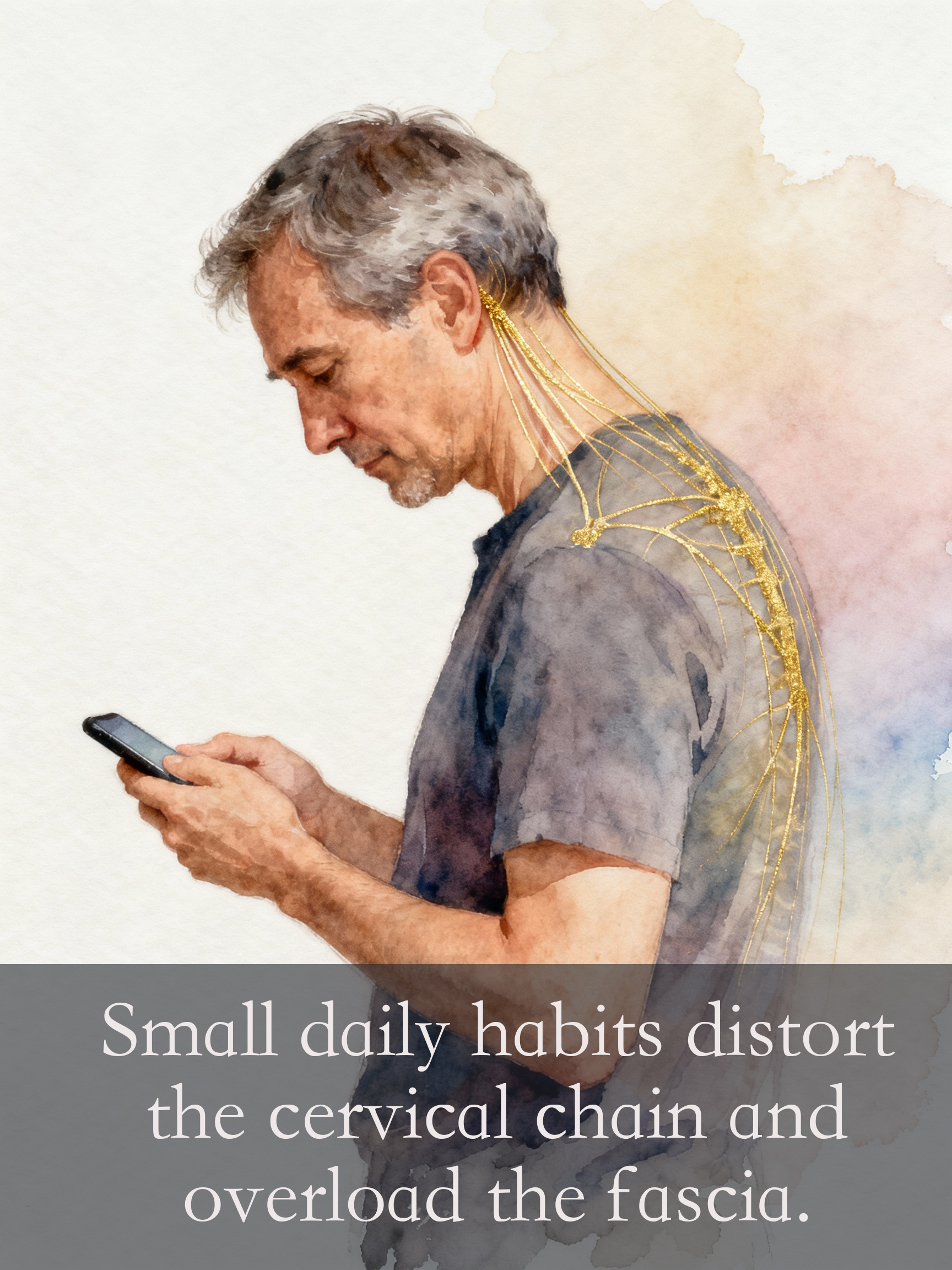
Modern posture contradicts human biomechanics. We look down at screens, collapse our chest, overuse our arms, and twist our pelvis without noticing. Common patterns include:
• forward head posture
• rounded shoulders
• prolonged driving posture
• one-sided carrying habits
• pelvis rotation from crossing legs
• excessive forearm pronation from typing
• weakened deep stabilizers
• compensatory tension in the neck and lower back
These are not “bad” habits—but repetitive patterns that distort the fascia. The result is:
👉 Certain tissues become overstretched
👉 Others become compressed
👉 Sliding layers lose mobility
👉 Nerves are pulled rather than pinched
Pain becomes the voice of the pattern.
4. Low-Grade Inflammation: The Invisible Fire
Low-grade inflammation has become a defining feature of the modern body. It is fueled by:
• sedentary circulation stagnation
• chronic stress
• processed foods and sugar
• poor sleep
• gut imbalance
• air pollution
• microplastics
• long-term muscular tension
• poor breathing mechanics
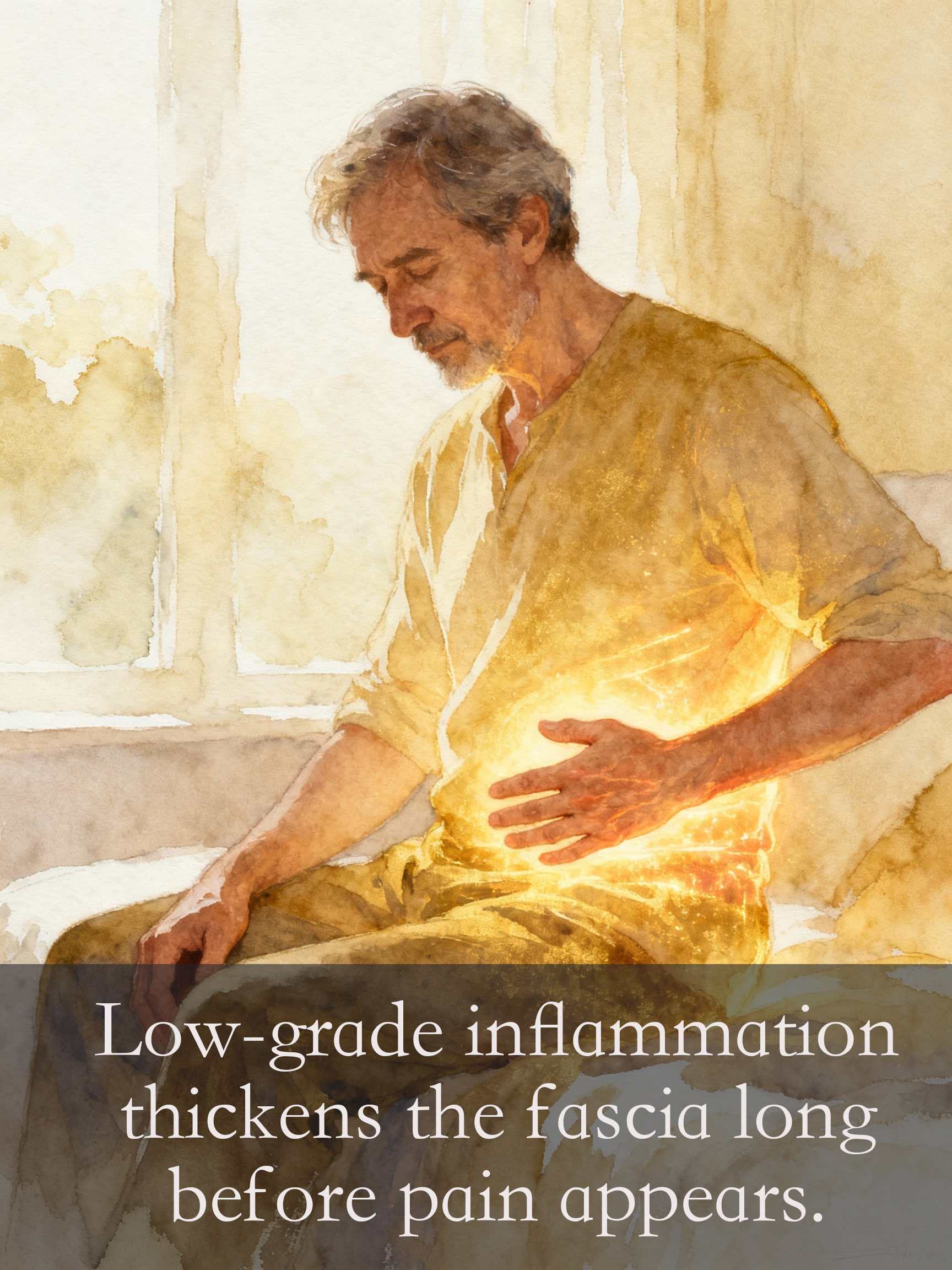
It doesn’t cause immediate illness, but it dulls vitality and heightens pain sensitivity.
In the fascia, it manifests as:
• thickening
• adhesion
• nodules
• morning stiffness
• swelling sensation
• inexplicable muscle fatigue
• slow recovery after exercise
These are early warnings of tissue overload.
🌿 How Fasciapuncture® Responds to These Modern Stressors
Fasciapuncture® is not designed to treat a symptom—
it is designed to restore balance to a system under chronic load.
Through its precise, gentle, and targeted approach, Fasciapuncture® can:
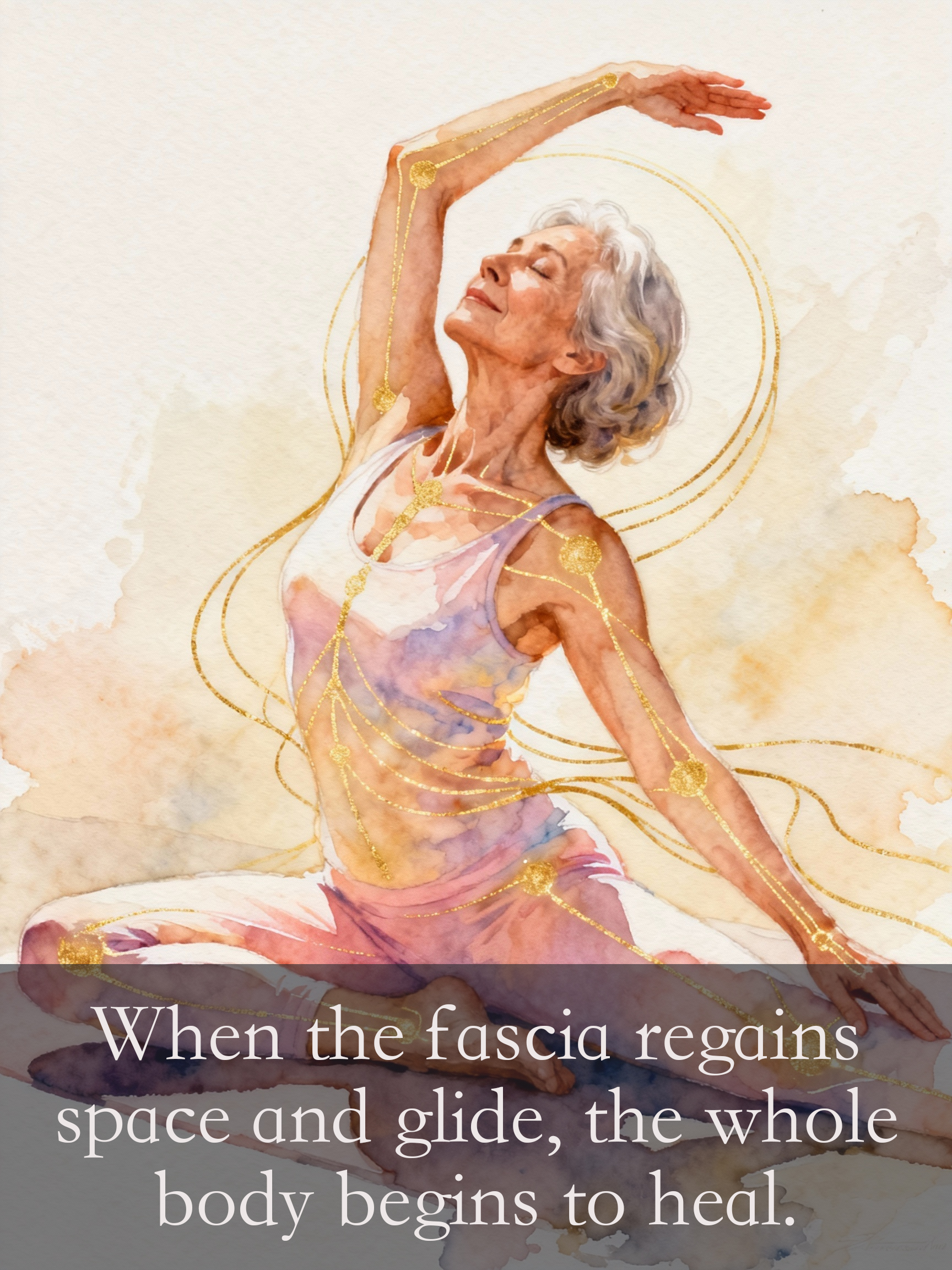
✔ Restore sliding between fascial layers
✔ Improve microcirculation in hypoxic tissues
✔ Reduce sympathetic overactivation
✔ Release deep-seated postural tension
✔ Normalize mechanical chains
✔ Support the body’s natural healing rhythm
✔ Help tissues “breathe” again
This is why patients often say:
“I can finally breathe deeply again.”
“My neck feels light.”
“My legs are warm for the first time in years.”
“I slept better than I have in a decade.”
These changes are not coincidences—
they are signs of a system returning to coherence.
🌙 Conclusion: The Modern Body Is Not Weak—It Is Overloaded
Pain is not a defect.
It is communication.
The modern body carries physical, emotional, mechanical, and inflammatory weight that previous generations never faced.
Fasciapuncture® offers a way to listen, release, and rediscover balance—
not by force,
but by restoring space, movement, circulation, and calm within the fascia.
When the body regains its natural room to move and breathe,
healing is no longer an effort—
it becomes a return.