Introduction: Why Wrist Symptoms Are Often Misleading
Wrist pain, stiffness, hand numbness, and temperature changes are among the most common complaints in clinical practice.
However, from the perspective of fascial anatomy and myofascial continuity, these symptoms rarely come from the wrist alone.
In many cases, the wrist becomes the endpoint of a much larger tension chain involving the:
-
cervical fascia
-
scalene muscles
-
clavicular structures
-
pectoral fascia
-
forearm fascial compartments
Understanding this chain-oriented mechanism provides a more accurate way to interpret wrist discomfort and offers a gentler, non-invasive path to recovery.
The Fascial Chain: From Neck to Wrist
Modern fascial research shows that the upper limb is not a collection of isolated joints.
Instead, it is a continuous, interconnected system extending from the cervical spine to the fingertips.
Key fascial segments affecting wrist function include:
-
Deep Cervical Fascia (C5–T1 region)
Surrounding and influencing the neural structures that supply the arm. -
Scalene Muscles and Brachial Plexus Region
A common site where tension compresses nerve gliding and alters circulation. -
Clavicular and Subclavian Fascial Passage
A narrow corridor where increased fascial density can influence downstream tissues. -
Pectoralis Minor and Anterior Shoulder Fascia
Often responsible for upper-limb heaviness, numbness, and cold sensations. -
Forearm Fascial Compartments
Transmit tension directly into the wrist and hand. -
Wrist and Palmar Fascia
The thinnest part of the chain, which often expresses the symptoms earliest.
Key Insight:
Wrist symptoms are frequently created by restrictions elsewhere along the chain, not by a local problem at the wrist itself.
Case Example: Rapid Wrist Improvement After Fascial Release
During a recent Fasciapuncture® session, a patient presented with:
-
intermittent hand numbness
-
temperature differences between both hands
-
reduced wrist extension
-
tightness around the thumb–wrist junction
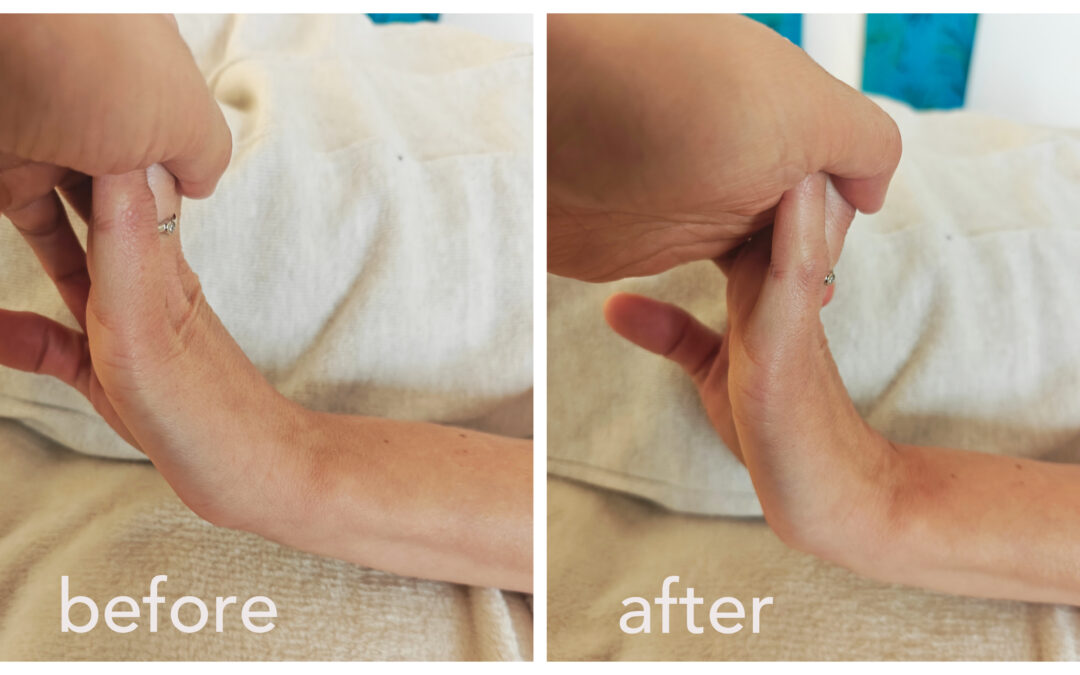
After releasing the cervical fascia, anterior shoulder fascia, forearm lines, and wrist fascia, the change was immediate.
Before vs After Treatment
Post-treatment observations included:
-
increased wrist extension
-
softer fascial texture near the radial wrist
-
improved warmth and circulation
-
decreased pulling sensation around the thumb base
This improvement did not come from treating the wrist alone.
It emerged because the entire tension chain was addressed.
Why the Wrist Responds So Quickly
From a fascial viewpoint, the wrist is particularly reactive because:
1. It is the narrowest part of the upper-limb fascial system
Even small changes in upstream tension create visible differences here.
2. It serves as a “pressure outlet”
When cervical or shoulder tension is released, the wrist often relaxes immediately.
3. It is highly sensitive to neural and circulatory changes
Improvements in nerve gliding and blood flow upstream quickly manifest at the hand.
This explains why patients often notice:
-
warmer hands
-
easier finger movement
-
improved grip
-
reduction in numbness
even when the sensation originated far from the wrist.
The Fascial Interpretation of Wrist Symptoms
Common wrist-related symptoms can often be traced back to fascial restrictions above the wrist:
Numbness
May reflect tension around cervical or scalene fascia affecting neural pathways.
Coldness or Temperature Difference
Frequently linked to fascial compression affecting microcirculation.
Stiffness and Reduced Extension
Often the result of accumulated tension transmitted from forearm compartments.
Nighttime Worsening
May be related to positional changes that increase cervical or pectoral tension.
Viewing the wrist through this fascial lens helps explain why local wrist treatments alone may not produce lasting results.
A Global Approach to a Local Symptom
A fascia-oriented clinical method focuses on:
-
releasing upstream tension in the cervical and shoulder region
-
restoring mobility in the forearm fascial lines
-
improving neural gliding dynamics
-
reducing mechanical pulling on the wrist fascia
This whole-chain approach helps the wrist function better by addressing the hidden drivers of the discomfort.
Conclusion: The Wrist Is the Messenger, Not the Source
Wrist symptoms—whether numbness, coldness, stiffness, or decreased flexibility—often represent a larger fascial tension pattern, not a purely local problem.
Key principle of fascial medicine:
✨ When the chain releases, the wrist follows.
✨ Free the root → the branch relaxes.
Understanding wrist problems from a fascial perspective opens a gentler, integrative, and anatomy-based pathway for upper-limb discomfort.