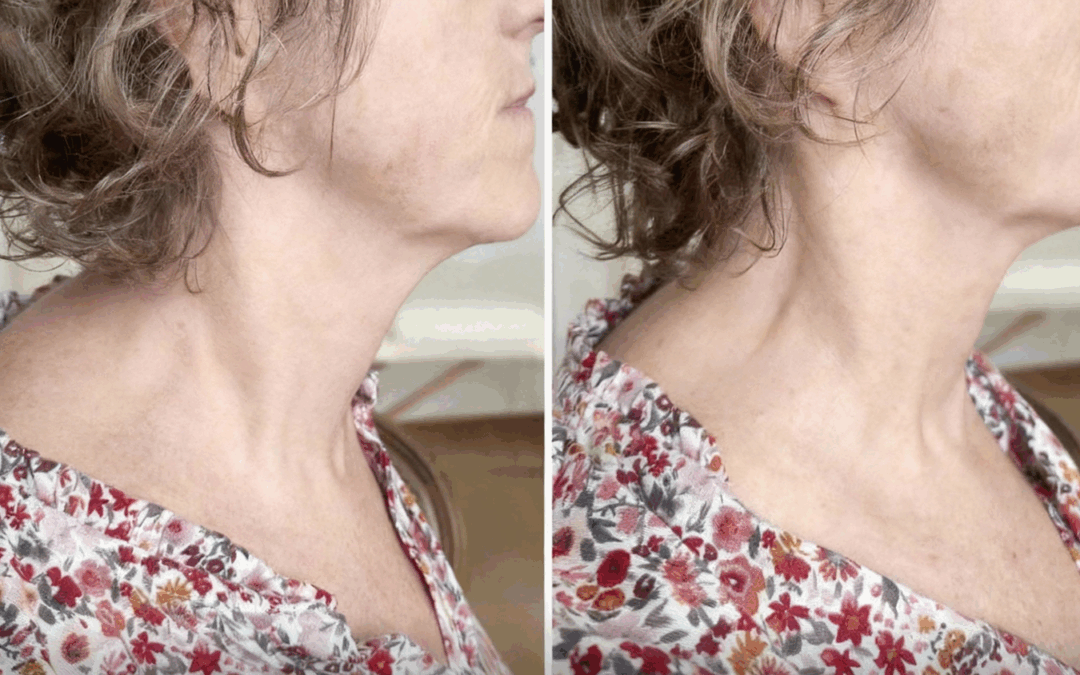
This case belongs to a wonderful woman who came to me with chronic tension around the base of her neck — a common area where stress, posture, and fascial tightness accumulate.
Many people call it a “buffalo hump,” but in most cases, it is not fat or pathology.
It is a fascial knot,
a protective tension pattern created by years of:
-
forward-head posture
-
stress
-
muscle guarding
-
and restricted cervical mobility
She felt heaviness in the upper neck, stiffness when turning her head, and a visible fullness at the cervico-thoracic junction.
Before the Treatment
As she gently tilted her head, the base of the neck showed a noticeable bulge —
a sign of:
-
shortened anterior cervical fascia
-
overloaded posterior neck fascia
-
and compensatory tightness in the deep cervical extensor chain
This kind of tension often affects posture, breathing patterns, and comfort.
After Fasciapuncture®
Following a series of treatments focused on:
-
releasing the deep cervical fascia
-
softening the suboccipital tension
-
restoring glide between the superficial and deep fascial layers
-
freeing the cervico-thoracic junction
a clear visual change appeared:
-
the neck base looked smoother
-
the tissue settled closer to its natural contour
-
the tension and stiffness eased
-
she felt lighter, more open, and able to turn her head with more freedom
The “before/after” photos captured what we could feel with the hands —
a softening, a return to balance, a release.
Why Does This Happen? (Professional explanation, no medical claim)
1. Fascial thickening often mimics a ‘hump’
Years of compensatory tension cause the fascia to become:
-
thicker
-
dehydrated
-
less elastic
Releasing these layers allows them to flatten and regain glide.
2. The neck and upper back fascia work as one chain
When the deep cervical fascia relaxes,
the thoracic inlet opens,
and the visible contour changes.
3. Fasciapuncture® restores mobility in places that hands alone often cannot reach
By working through key fascial points,
the whole cervico-thoracic region reorganizes itself.
A Small Change, with a Big Meaning
This is not cosmetic work.
It is the body’s natural response to being released from years of invisible pressure.
Sometimes, even a slight change in contour tells a deeper story:
A burden lifted,
a posture freed,
a breath becoming easier.